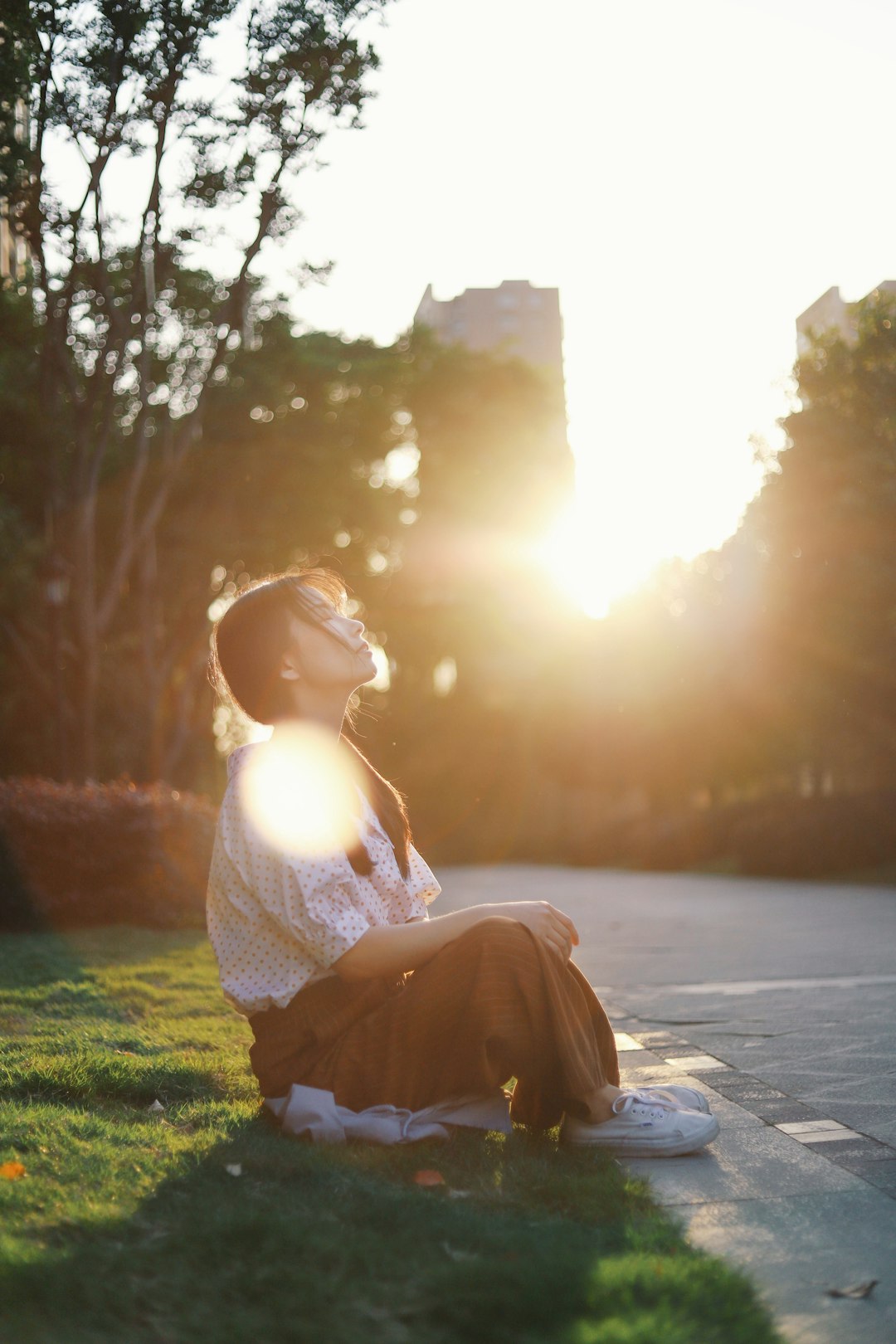
This is a letter I have been trying to write for a long time. It is for the woman I used to be, and for the women who write to me each week with versions of the same question — how did you stop? — as if the stopping were a single, dramatic decision instead of what it actually was: a slow, embarrassing, mostly involuntary unravelling.
I will try to tell it honestly. I do not know any other way.
What I was running from
At thirty I had what most people would have called a good life. A senior job in a marketing firm in Casablanca. An apartment with a balcony I never used. A man who loved me enough that I felt guilty for not loving him back the way he deserved. A calendar so full that I had begun to schedule the things I used to do for pleasure — a coffee with my sister, a walk by the corniche — into thirty-minute slots between meetings.
I had not had a regular menstrual cycle in two years. I assumed this was normal. Several women I worked with had stopped bleeding altogether and said it was a blessing. None of us went to a doctor. We went to brunch.
I was tired in a way that sleep did not touch. I was thin in a way I was proud of. I was successful in a way that made my mother pleased and my body furious.
The day it broke
I do not have a dramatic story to tell you. There was no collapse, no hospital, no crisis. There was a Tuesday. I was in a meeting that I had prepared for badly. The presentation was going fine. I was talking, and watching myself talk, and the voice in my head was saying — very calmly, almost politely — I do not want to be here. I do not want to be here. I do not want to be here.
I finished the meeting. I went to the bathroom. I sat on the closed lid of the toilet for twenty minutes with my hands over my face. When I came out I told my colleague I was leaving for the day. I did not come back for nine months.
I had assumed the breaking would be louder than it was. It was very quiet. It was almost polite.
The first six months
The first six months were not beautiful. I did not move to Bali. I did not write a book. I did not, despite what some of my retreat guests imagine, immediately begin to heal.
I cried a lot. I lost more weight before I started to gain it back. I read entire novels in a single sitting. I slept twelve hours a night and was still tired. I argued with my mother. I argued with my partner, then ended things with him, gently, on a Sunday afternoon, and I have never regretted it. I went for long walks and noticed that I had not, in years, walked anywhere without a destination.
I did not yet practise yoga. I had tried it a few times in expensive studios and found it irritating. The teachers spoke too much. The music was too loud. The other women looked too composed. I was sure it was not for me.
The room that smelled of orange flower water
It was my aunt who took me, in the eighth month, to a small studio in the medina in Marrakech. The teacher was a woman in her sixties who barely spoke. The room had eight wool blankets, two clay pots of water, and a window that opened onto a courtyard with a single fig tree.
She did not give us a lot of postures. She showed us one, and let us stay in it for what felt like an hour. The first time, I cried in balasana — child's pose, with my forehead on a folded blanket — for what was probably ten minutes and felt like a year. She did not come over. She did not adjust me. When I finally sat up, she met my eyes from across the room and nodded, once, and that was all.
I went back the next day. I went back every day for three months. By the end of the third month I had started to bleed again, regularly, painfully, gratefully. By the end of the sixth month I had decided to do the teacher training myself.
What the running cost me
I want to be honest about this part, because it is the part that women in their late twenties and early thirties most need to hear.
The running cost me my fertility, for a while. It cost me a partnership I had wanted, with a person who deserved better than the version of me that existed at the time. It cost me my relationship with my body for the better part of a decade. It cost me the years in which my grandmother was alive and lucid and would have told me, if I had asked, exactly how to stop.
I am not saying these losses were necessary. They were not. I am saying that they were mine, and that I have stopped pretending the running was free.
What I would tell her now
If I could write to the woman I was at thirty — and I suppose this is what I am doing — I would not tell her to quit her job. I would not tell her to leave the man. I would not tell her to move to a riad in the mountains. Those things, in their own time, will arrive or they will not.
I would tell her, very simply: put your hand on your lower belly. Right now. In the meeting. In the elevator. In the bathroom stall. Just for a moment. And ask the body what it needs.
That is the entire instruction. The body has been waiting for the question for a long time. It will answer the first time you ask. You will not like the answer. You will ask anyway. That is the beginning.
✦
I am thirty-eight now. I bleed every twenty-eight days. I sleep eight hours and wake up rested. I teach four mornings a week. I have a small house with a small garden in Casablanca, and a riad I share in the Atlas, and a man — a different one — who is patient and amused and who lets me be quiet at breakfast. I am not healed. I am still, sometimes, a woman who is running. The difference is that I notice it now. I notice it, and I stop, and I put my hand on my belly, and I begin again.
That is all I have. That is enough.
— Ghizlan