We were six. Not the eight I had planned for, because two cancelled in the last week — one because her father had fallen ill, the other because she had finally, finally found the courage to leave a marriage and could not face being away from her children for five days. Both reasons felt right to me. Both women asked if they could come the next time. Both will.
So we were six, in a small riad an hour above Imlil, where the road becomes a track and the track becomes a question. The owner is a woman named A. who has been hosting retreats in that house for twelve years. Her cooking is the reason most of my repeat guests return. The yoga is, as one of them says, only the excuse.
Day one — arrival
The first afternoon is always the hardest. The women come exhausted from their flights, from their lives. They want to talk. They want to perform their gratitude. They have not yet been given permission to be silent, so they fill the air with their stories and their questions and the small worries they brought with them.
I let them. I do not yet ask anything of them. I make tea. I show them their rooms. I ask them to leave their phones in a basket by the door, and most of them do, and the ones who do not eventually do, on the second or third day, when the silence becomes easier than the alternative.
That first night we sit on the terrace in the cold and we eat lentil soup with too much cumin and we say almost nothing. The mountains are doing the work for us.
Day two — the body
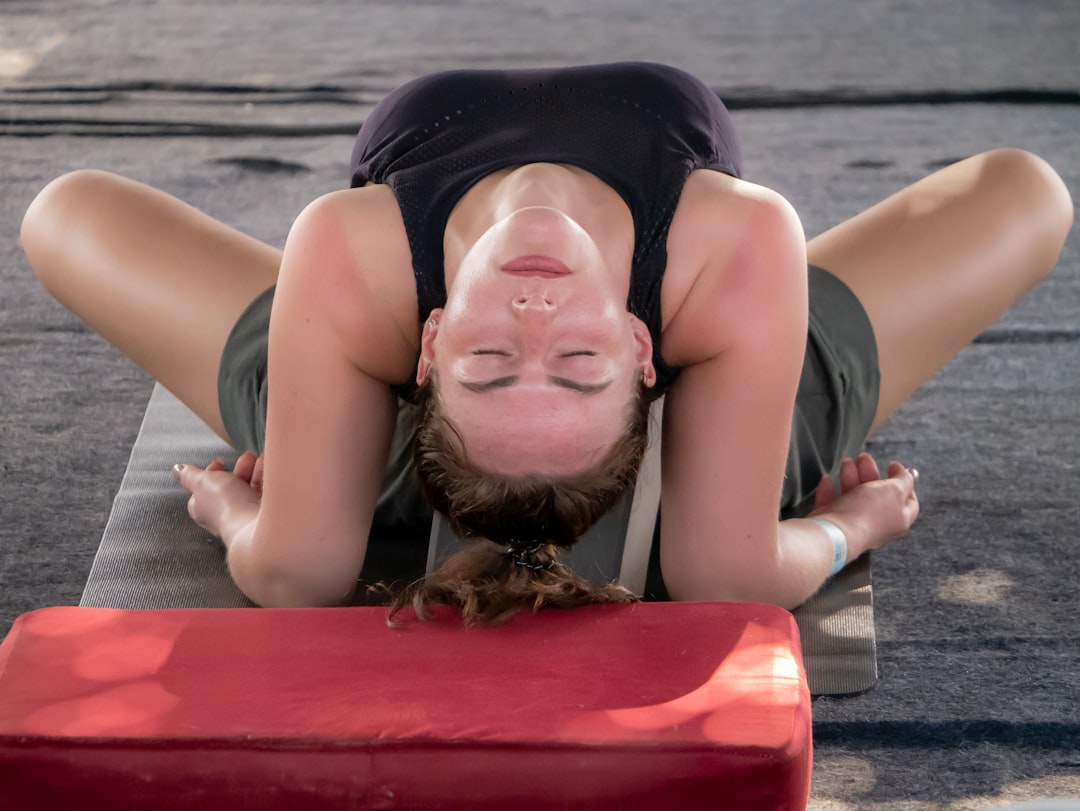
We begin slowly. Two hours of yin in the morning, on the tile floor with thick wool blankets. I do not give them many postures. Sphinx. Caterpillar. Saddle. Sleeping swan. Long holds. The kind of practice that, if you are not used to it, feels like you are doing nothing. After an hour they begin to understand that doing nothing is the entire instruction.
Most of these women have been performing their lives for so long that the absence of an audience is the practice.
By the end of day two, M. — a lawyer from Brussels who arrived with a polished list of intentions for the week — has cried twice and apologised for each. I tell her, gently, that the apologies are the problem. She laughs. She does not apologise for the laugh.
Day three — the women
This is the day, on every retreat, when something cracks open. I do not plan it. I cannot plan it. It always happens, and it always happens differently.
This October it happened during the afternoon walk. We had gone up the slope behind the riad to a small clearing where there is a fig tree and a rough stone bench. I had not asked them to share anything, only to sit. After perhaps twenty minutes one of the women — I will call her S. — started to speak about her mother. The mother had died two years before. S. had not yet been able to tell anyone what their last conversation had been. She told us, then, in pieces, with her hands on her own face. None of us moved. None of us reached to comfort her. We let her finish.
Then another woman spoke, about her sister. And another, about a child she had not been able to carry. And another, about her own mother, who was still alive but with whom she had not spoken in seven years.
By the end of an hour all six of us had said something we had not said out loud before. The fig tree was witness. The wind moved through it.
I want to be careful here, because I know how this can sound — like a script for a kind of feminine suffering that has become fashionable to perform. It was not that. It was much quieter. It was much more useful.
Day four — the bread
On the fourth day A. teaches the women to make bread. We had not planned this either, but there is something in the kneading that the body needs after the third day's work. Six women, six small mounds of dough, an hour of silence broken only by laughter at our own clumsy hands.
The bread is terrible. We eat it anyway, with olive oil and honey, on the terrace at sundown. It is the best meal of the week.
Day five — the descent
The last morning is for goodbye, and I have learned to make it brief. A short practice. A long silence. We exchange small things — a stone from the slope, a sprig of dried thyme, a folded note that none of us read until we are home. Then the cars come, and they go.
Three of the six women have written to me since. M., the lawyer, has started a small Sunday circle in Brussels. S. has begun to call her father every week, after years of silence. The others have gone back to their lives, and I do not need to know what has changed in them. The mountains know.
✦
If you are thinking of coming
The next retreat in the Atlas is in October. Six places. I keep them small on purpose. There is no application form, no questionnaire, no curriculum. There is only a quiet room, a few practices, several long meals, and the company of women who have agreed, for a few days, to stop performing.
If that sounds like what you need, write to me. I will tell you the rest.
— Ghizlan